

Written by Lynn Marie Allen
Wander back in time did June 8, 1913, to farmers in Edinburgh, Scotland, where two hearty stout gentlemen, are walking beside a Hopetown Quarry. The farmers’ names were Duncan and Thompson. They make a grisly discovery! What they find are the bodies of two small children who have, by all accounts, had been in the water for some time. As the story unfolds, two deceased children’s bodies were pulled from the water and were identified as John and William Higgins, aged four and six. Even in their badly decomposed state, it was easy to determine they were brothers. Further evaluation by the physicians on the case showed that the boys died sometime between 1911 to 1912.
(The below images are of John and William, circa unknown.)
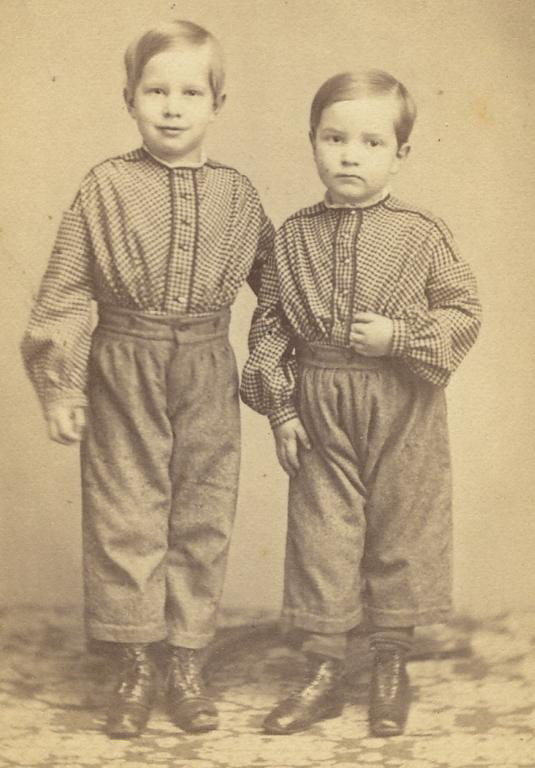
Wander back a little further in time. It’s 1910, and life circumstances are harsh in Scotland. Recollections of the life events of the boys and father described them often gathering scraps of anything they might find to sustain themselves. The boy’s mother, Bridget Johnston, died at the young age of 33, and was from Broxburn, Scotland. (PS., I am digging for an obituary to find the cause of death; I have not been able to locate) Patrick is discharged from the military after serving in India. Presumably, an honorable discharge. Patrick reported epileptic fits, headaches, and forgetfulness. Was documenting these health conditions the foundation for future events that later unfold upon his return to Scotland? Patrick now a widower, and is unwilling to step up and provide the necessary care for his children, more so even annoyed by the children’s existence. In Scotland there are scarce work and even fewer food opportunities. Patrick and the children often find themselves stealing.
Patrick could not keep his story straight when asked about what happened to his children. Here are a few details, the boys were placed in foster care, Patrick had been determined unable to provide care. Reportedly the children were placed into foster/social welfare custody. Patrick reported he did not have family alive to help. Court records show testimony from a grandmother, aunts, and uncles, all willing and offered to the young children; offering a vastly different course could have been created for the boys. Were all these events merely crimes of circumstance or an opportunity for murder and the birth of a serial killer?
The children, upon being placed in foster care with a lady in Broxburn, Scotland, which in the purest of ironies was where the children’s mother was from. The foster mother will, at some point, return the children to the father when Patrick failed to pay the fee for their care, which was between $8 and $10 per month! Utter failure on the part of social services who looked the other way and ignored the welfare of these children. John and William were returned to Patrick, who had been determined incapable of providing for the children. Patrick always found money for the pub but none to ensure the safety of his own precious children.
On a cold and rainy night in November 1911? Patrick walks with the children in the early evening on the boy’s last night seen alive. Locals were used to seeing the three of them about and paid very little attention. Patrick takes the boys to the quarry, where he takes a rope from his pocket, ties the two boys together, picks up his children, and throws them as far as he can into the murky water. Was there an ounce of sadness or remorse immediately following these events? He returns to the pub, where he is, and promptly when asked about the boys. Patrick recalls the events of the evening earlier, where he described two kind women offering 25 shillings to Patrick and an offer to care for the boys. Patrick only assumes this was the best course because they would be better off under the ladies.
(An important fact for you to consider is if this was as Patrick recounted a crime of circumstance or pleas of insanity, the rope would not have been in his pocket to tie the two young toddlers together before throwing them into the water.)
Later in the court records, testimony recounts the grandmother, aunts, and uncles all offered to take the children. The judge had no sympathy for Patrick and sentenced him to death. Patrick pled guilty because of insanity or mental defect to the crime. The judge argued that perhaps, perhaps, there were circumstances of insanity at the time of the boy’s death. The crime goes unreported for so long that the judge declares Patrick may have been insane in 1911 but not in 1913 when Patrick stood trial for the crimes. The judge goes on to scold that the lack of professionalism on the part of everyone charged with their care was profoundly inexcusable. If someone had offered aid or intervened with the boys, would they still be alive? In Edenburg on October 2, 1913, Patrick Higgins was hung in a jail stairwell for taking his young children’s lives.
Forensic scientists Sir Sydney Smith and Sir Harvey Littlejohn made remarkable advances in the field of forensic sciences with their involvement in the case of the boys. The men gave little regard to the children’s bodies and only considered the scientific research badly disfiguring the children and removing body parts without the family’s consent. Both gentlemen are regarded highly for significant advances in forensic science. The quarry where the murders occurred is now a fishery called “Paddy Higgins Hole.” Is it another irony or tragedy the quarry is renamed Paddy Higgins Hole rather than honoring the two boys or merely remained Hopetown Quarry?
“History Mysteries” and “Chasing My Sparkle” are the intellectual property and creative inspirations of Lynn Marie Allen.
 Forest of Words