
Written by Lynn Marie Allen
For at least 4,000 years, New Year celebrations have occurred. The earliest recorded celebration occurred in Babylon, and the occasion was a religious festival called “Akitu.”The purpose of the festival was two-fold. The first marks the harvesting of Barley, which the Sumerian word for Barley is “Akitu.” Also, it depicts a political battle between the sky God, “Marduk,” and the evil sea Goddess, “Tiamat.” The struggle may symbolize changing the crown from an old ruler to a new ruler.
From the earliest New Year celebration to the evolution of the festivals we see and know today, many traditions include meals and treats to inspire good fortune for the following year. In Spain, they eat 12 grapes before the New Year to boost hopes for the months ahead. Many countries include a meal of legumes, thought to resemble coins, and mark good fortune for the New Year. A pork meal in Cuba, Austria, Hungary, and Portugal symbolizes progress and financial prosperity for the year. Cakes in the shape of a ring, meaning full circle, are seen in Greece, Mexico, and the Netherlands. In Norway and Sweden, rice pudding with a hidden almond foretells a year of good luck for the lucky person who finds the almond.
Other customs include fireworks and singing, and making promises to earn the favor of the “Gods” to start the year off on a good foot and may be the earliest recollections of New Year’s resolutions. As always, hoping you find your new year filled with twelve months of blessings, fortune, and inspiration from all things history! As always, there is so much more to every story. Be sure to reach out and let me know what you discover! #HistoryMysteries
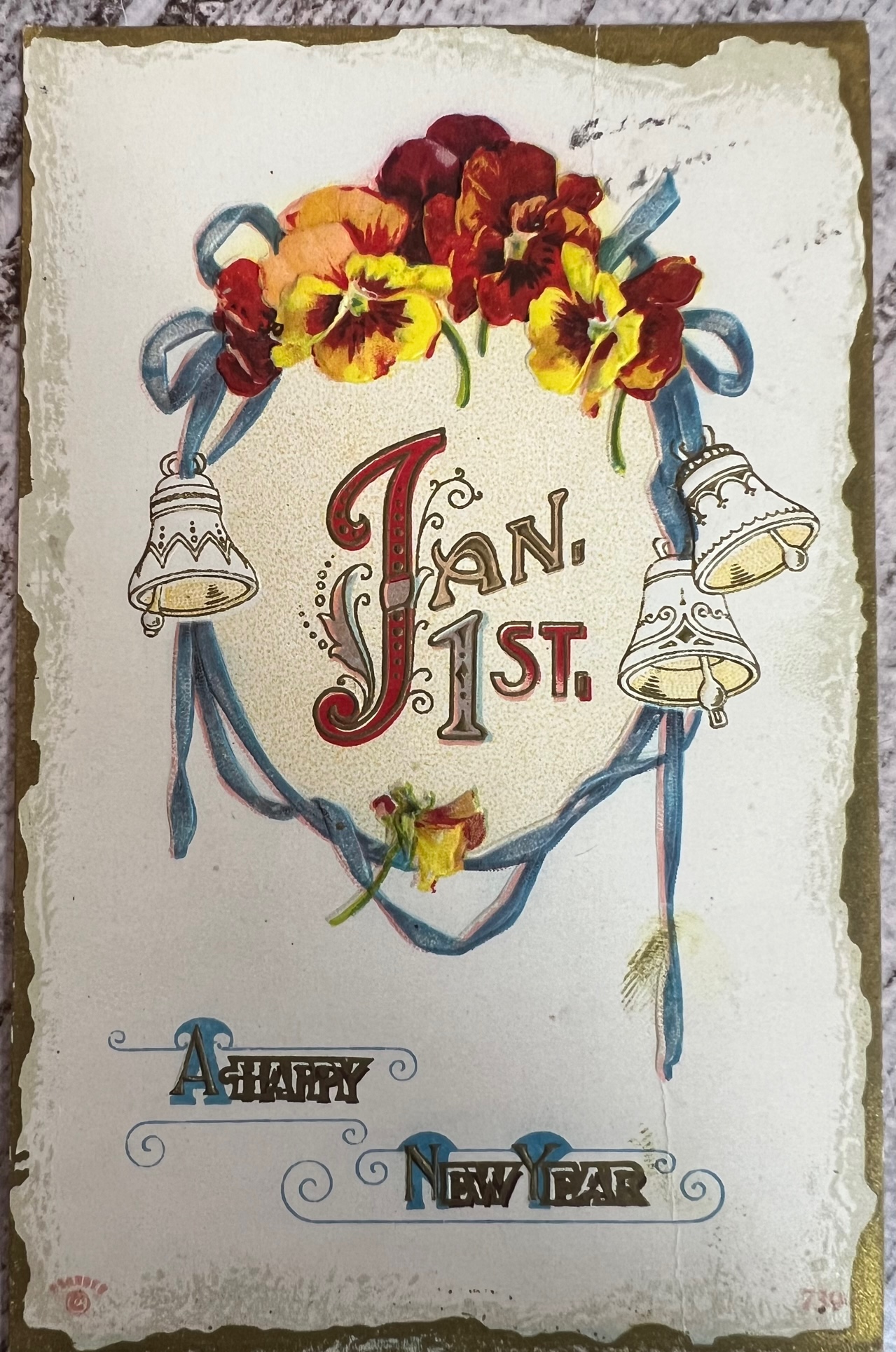
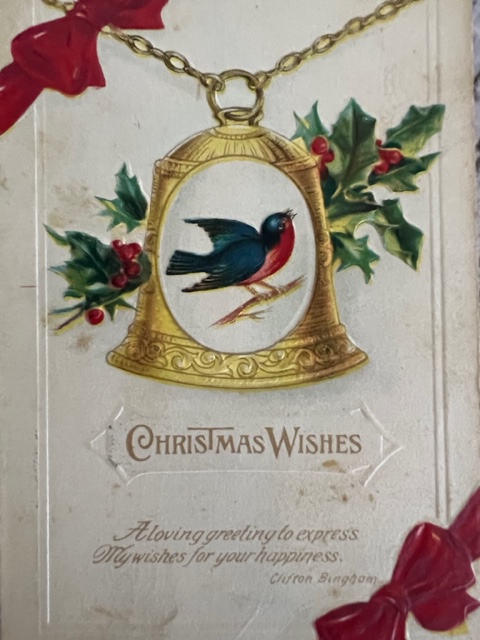
Pictured New Year Post Card Gem, circa approximately 1920. Image is the intellectual and physical property of Brown County Historical Society.









 Forest of Words