When my Dad passed away, it was like someone had ripped the carpet out from underneath my feet. It wasn’t a slow sort of graceful carpet grabber. More or less, it was like everything on the planet had crashed and shattered. I could not catch my breath. I missed him so profoundly that it filled my soul with heartache that it is incapable of describing. Since he died, it has been two years, nine months, and seven days. It’s been 33 months, seven days. It’s been 144 weeks and three days. It’s been 1011 days, and it’s been 24,264 hours, and it has been 1,455,840 minutes and 87,350,400 seconds. Yesterday, I, of course, attended the American Legion Service of Remembrance. For me quietly to honor of my Dad, for which I need no accolades. At the beginning of each service, I think this will be the year that I fortify my Dad’s memory with more honor and fewer tears. I make it through “The Star-Spangled Banner” and “God Bless America,” both songs I am very proud of as I am of my country. The third, I begin to hear the bugle brilliantly playing “Taps,” and my heart fills with a tidal wave of tears that I have been holding back. It builds softly in my throat. I step on my toes, trying not to start crying. On June 12th, it is my Dad’s heavenly birthday, and even as the end of May approached, I was already thinking of his birthday, and he would have been 72 years young!
I am a quiet, thoughtful person, yet I love words. I may not say much, but I have a lot to say. People are often quick to judge things they know very little about, and I can only say that there may very well be more perspective at the gates of Heaven. #KindnessMatters
Written by Lynn Allen, Executive Director/Curator Brown County Historical Society
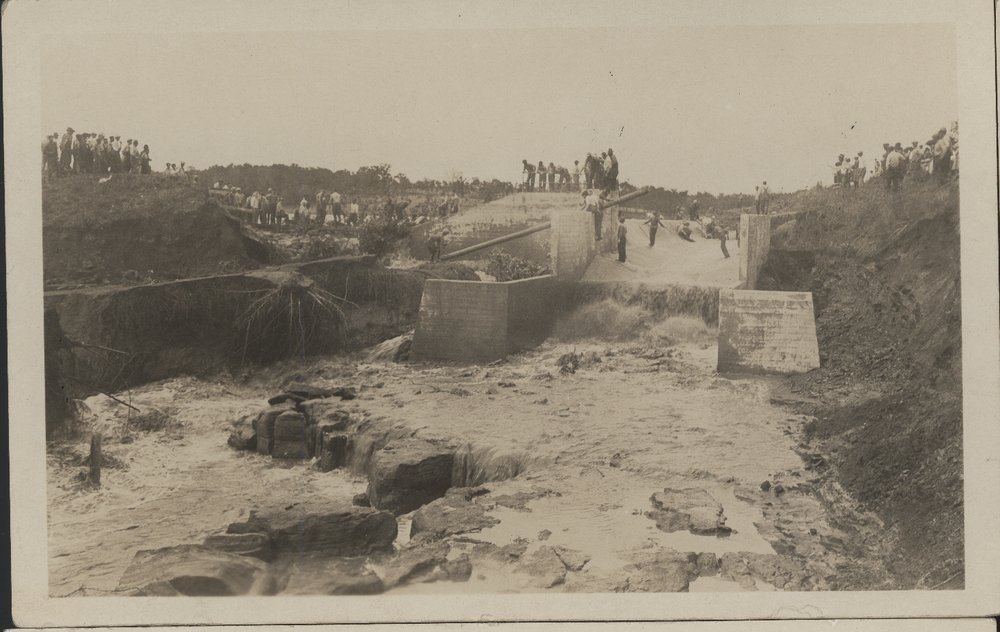
Last week, on a journey exploring history as I often find myself doing. History rarely ever disappoints. On Thursday, June 24, 1925, a thirty-five-foot fracture failure on the Horton dam was realized, quickly unfolding into disaster. The dam responsible for holding the town’s drinking supply is a 1200-foot dam. No less than five hundred men from the surrounding community attempted to repair the fracture before the city’s east side flooded, wiping out homes. The men, working around the clock for over 24 hours trying to fix the fracture with sandbags and any other helpful item to prevent further flooding. On the evening of Wednesday, June 23, 1925, over five inches of rain fell. Two earlier downpours brought the total rainfall to eleven inches, caused the dam to swell. The dam ordinarily capable of holding over 700 million gallons of water was now ready to burst with over a billion gallons of water.
The response to the call for help to prevent a catastrophe was overwhelming! Men and women heard and responded from Hiawatha, Fairview, Everest and Baker, and many other towns. The community rallied behind one another, closing shop for the day to attempt to avert the disaster. Many recalled hearing the roar of the water from over a mile away.
Community members orchestrate the subsequent events to work together to prevent further calamities. Colonel Charles Henry Browne (Colonel at the time) hung lights over the dam so that men could have light through all hours. J.S. Henderson, Brown County Commissioner, was there overseeing the thirty-five-foot gap closure. At some point is determined that a controlled blast of dynamite could avert the disaster. E.G., Christiansen directed the workers. Still, many more community members banded together to prevent the catastrophe from furthering its course. Colonel Browne put up tents at the West side of the dam and employed the women of the area to oversee supplies, food, tobacco for the men during the short rest periods.
The spirit of the community and good nature was visible throughout the entire course of this disaster. There are history explorations all around each of us, ready and eager for anyone to explore. There are also lessons on how to be better humans. Kindness matters, so the biggest takeaway from this experience and all experiences is that all people matter. Our words matter, our actions matter, and our behavior should most profoundly reflect the lasting imprints we want to leave on the world. As always, there is so much more to every story. Find it, be sure to reach out, and let me know what you discover! #HistoryMysteries
Pictured 1925 Dam Breaks in Horton photograph is part of the Brown County Historical Society Collection.
What if we became prolific masters of kindness? What if we demonstrated empathy and compassion. What if we taught compassion, kindness, and integrity! What if, instead of condoning or casually accepting acts of cruelty, rather we empower individuality, gentleness, creativity, and sparkle! What if we learned that individually we are all ethnically diverse, but together, we are masters of the entire universe! What if we demonstrated love and loyalty and expected them to be common occurrences rather than random acts of grace! What if we empower people to learn, grow, share and BE MORE! What if we spoke up to acts of cruelty and violence rather than remaining silently indignant to the events! What if we chose to light the world up with kindness every day and let that be the fire we breathe! That’s the world I imagine for you and me! #kindnessmatters #hope #defendingmyzipcode
I am that girl! The one that believes in all things magical, color the world silly! Pinks, purple and blue hues, of course, cascaded with oceans of sparkle! I am precisely and profoundly the person that never struggled to imagine that fairies existed. I just knew these delightful spirits existed. Indulge me for a minute, or two or three. The fairies, I imagine, are the profound masters of sparkle!
Nonetheless, I also am always on a mission to uncover all history. Therefore, it only seemed perfectly natural to search to discover more of these creatures’ history.
“Brownies” are “guardian fairies.” These fairies do housework and other odd tasks about the house. I do not have the slightest clue who or what inspired the name for the creatures. For the sake of all reasoning applied to my life, I have the utmost respect for all forms of ethnic diversity! It’s your mother effin’ sparkle and perfectly captures my mindset.
Banshees are scary and often sinister. These individuals’ purpose is to forwarn danger or foretell the auspicious event. I sincerely doubt any of us have stopped to inquire if they are scary and sinister, so perhaps another mistaken identity.
Mermaids and Mermen are nature fairies. The will-o- the wisp is considered a very dangerous fairy and lures the unsuspecting to an untimely death. Several authors have told tales or wound them around stories of fairies and other mystical creatures. One author, William Butler Yeats. A man I had come to know and develop a profound love for his quotes! “Education is not the filling of a pail but the lighting of a fire” I had been living my entire life with no clue he had written these stories and now plan to check them out at my earliest convenience.
“The Celtic Twilight” – 1893, 1902, William Butler Yeats “Fairy and Folk Tales of Irish Peasantry” – 1888, William Butler Yeats
In these books, the author does his best to outline the types of fairies. One distinction spends time defining trooping and social fairies and solitary fairies. Trooping/Social fairies band together “clannish” in the group with frolicking and merriment. Solitary fairies, an example, would be a leprechaun (Loud booming noise! Mind blown). The entire theory of leprechauns has upset the order of my brain! I much to credit my overactive imagination and stories throughout my life, imagined these creatures as a very “clannish” and family-oriented this seems very social to you right? Social fairies wear green jackets, and solitary fairies wear red or brown jackets!
Of course, I have an excellent reason for developing admiration and love for these fairy creatures and all things that sparkle! I will now share with you, and then we can all be twisted! “Darby O’Gill and the Little People” “Gnome Mobile” are movies that have been around a minute or two but might inspire a little sparkle in you! Enjoy!
Authors note: Consider my mantra to be the following, what makes you different sets you apart. The very thing that sets you apart is your sparkle. For example, in my childhood, I was often teased, taunted, and generally bullied my red, tightly coiled curls. Today the very same red coils are my superpower. Consider your power! Spread love, joy, kindness, happiness, and of course, share your sparkle.
The fabric of Brown County history utterly transformed with the Rock Island Railroad both its arrival and departure! The departure begins as a result of the industry attempting to cut costs and maximize profit! The route changes affect many of the towns in Brown County, Kansas. This week happens to be about some of Horton, and the townspeople’s ways are affected by the transformation and reroute previously mentioned. Horton referred to as the “Magic City.” The reason for this is that the city, almost overnight, is utterly transformed from a vast sprawling cornfield into a thriving business community in a very short period. Rock Island depot and shops will become the most significant site west of Chicago.
M. A. Low, who was President of the Chicago, Kansas, and Nebraska Town Company, selected the location, and the Rock Island Railroad will purchase 620 Acres for the depot and railroad shops. The first town lots of lands publicly sold on September 20, 1886. On October 29, 1886, the first issue of what will later be known as the Horton Headlight began distributing the paper. On November 12, 1886, the first train arrived in Horton at the Rock Island Depot. Three days later, the post office opens, and in March 1887, The Bank of Horton opened. Horton will reach its peak population in 1923.
Today there are very few visible pieces of the “magic city” historical treasures for a person to admire. As an individual who has a profound appreciation for all things history, this saddens me. I sincerely hope that if you have people that have history treasures to share, you will take the time to ask them and preserve them! Every story demonstrates the fabric of Brown County having the remarkable ability to thrive. These stories, albeit priceless, cannot be lost! If you have a precious memory, perhaps it has been told you millions of times, but maybe it is your favorite. Record it; share it, and in this way, we keep the imprint of what happened a part of yesterday, today, and tomorrow. Please, don’t let these history treasures fade away! As always, there is so much more to the story! Find it! Be sure to stop by and share with me what you discover. #HistoryMysteries
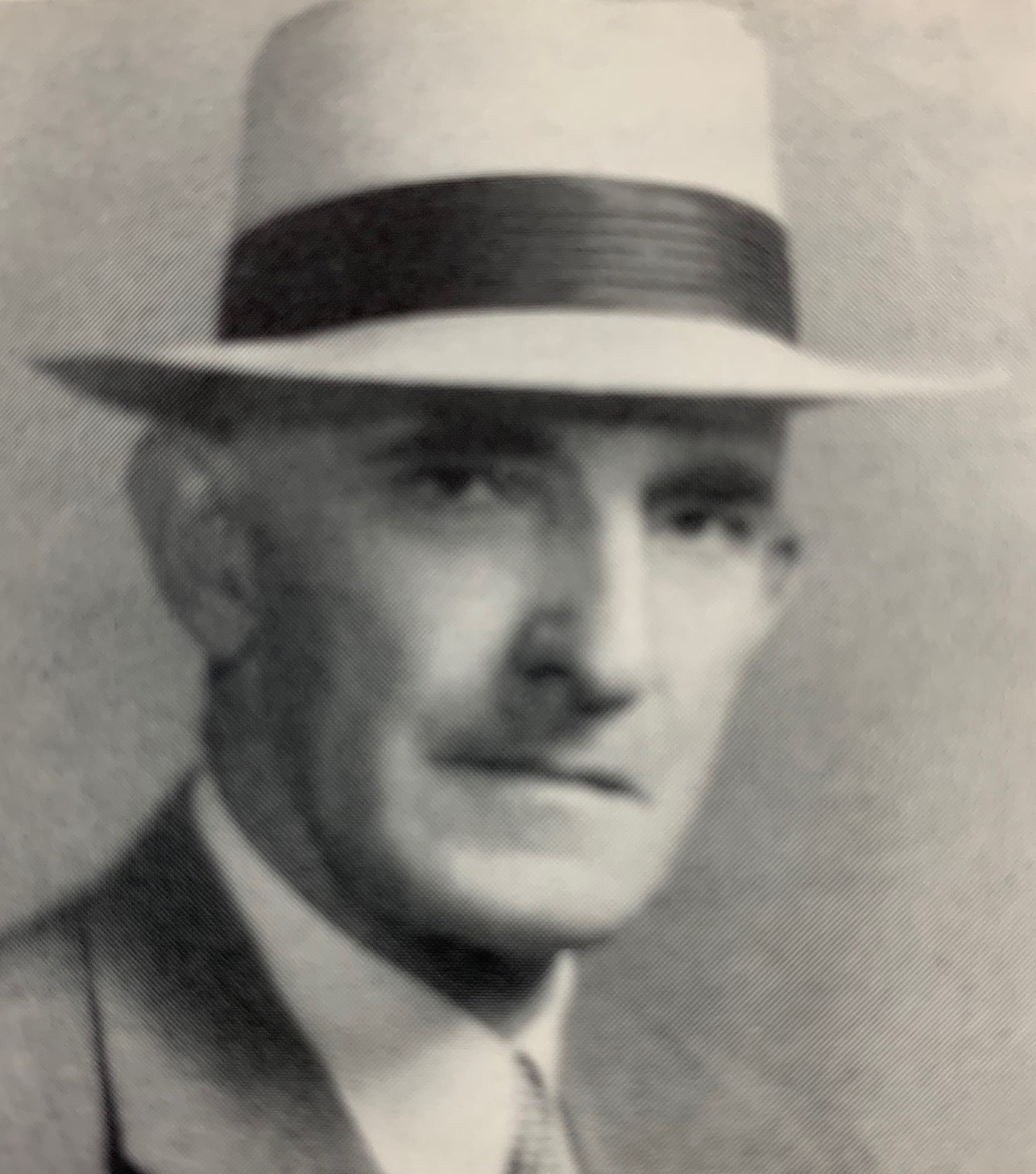
On a journey exploring all things history this morning, and my interest again captured by many things in Horton’s past that no longer visible for the avid history adventurer to discover. Charles Browne credited many achievements during his lifetime and strived to make a difference in his community. Charles Browne writes a good many things in his lifetime and is the Editor of the Horton Headlight for many years. Charles will serve on the school board in Horton. His home located on East Mina Street. Mr. Browne had served as president and was an active member of the Horton Commercial Club.
Charles recognized the need and introduced the idea of state-owned armories. Charles is the driving force behind the armory in Horton. Charles will also raise funds for WPA (Works Progress Administration) and CCC (Civilian Conservations Corps) projects, which are both “New Deal” programs during the Great Depression. Perhaps this may speak to why Horton received so many incredible New Deal funded projects. Charles regarded as an individual of high moral fiber and character. As always, there is so much more to the story! Find it! Be sure to stop by and share what you discover!
There are so many incredible pieces of history in Horton, begging for someone to uncover them. History should be preserved for future generations to experience. Explore and uncover marvelous history relics; uncover mysteries in your family treasure chests. There is as always so much more to every story! Find it! Please reach out and send me a quick note and share with me what you discover! #HistoryMysteries!
Pictured Charles Henry Browne Sr. Photographs as part of the Horton Headlight Souvenir Edition, October 30, 1986, which is part of the Horton Headlight Collection.
History these are the stories that inspire people to leave his or her lasting mark. Tales that enrich and can resonate from within your soul. The Notre Dame Cathedral is a remarkable building that housed many historical treasures.
The Notre Dame cathedral placed its mark in history in 1160, under the influence of Bishop De Sully, and was for the most part mostly complete in 1260. Still, as it happens throughout the cathedral’s history, it would suffer many blows structurally due to revolutions, natural disasters, and other historical impacts. In 1831, Victor Hugo will write a story, “The Hunchback of Notre Dame,” that will once again catapult the cathedral into the public’s eye. Shortly after Hugo’s book is published, the Notre Dame cathedral will have another significant restoration from 1844 to 1864.
The cathedral is one of the most visited monuments in Paris and has undergone many reconstructions and renovations throughout history. On April 15, 2019, there was a catastrophic fire in the cathedral. Plans are already underway to restore what was damaged.
The cathedral is lovingly referred to by the French people as “Notre Dame de Paris,” which means “Our lady of Paris” The cathedral was created in the French Gothic style, and one of the most striking features is huge rose-colored windows. Many times in life have you heard the expression, “you are looking at the world with rose-colored lenses?”
In this humble author’s opinion, we should all be so fortunate that we see the world with rose-colored lenses. For this author, what it means is developing a vision that looks for the beauty in all things, not just the things that show outward beauty but reflect and dig much deeper where true beauty lies. When you see the world through this lens, you remain humble and soft to the world; you see the world with gratitude and appreciation. What will you see today? #historymysteries
Memories can be wonderful and help people to remember who and what they stood for. What does their story say about them! My great-grandmother Winnie… I loved going to her house, and I adored her even more her snicker-doodles! They are one of the ultimate guilty pleasures! I remember. As Great-Gran was melting the butter, she would lovingly place a piece of butterscotch candy into the butter before marshmallows that were the secret to this divinity! No one on earth makes snicker-doodles as granny did! I miss watching her as she prepared the decadent treats!!
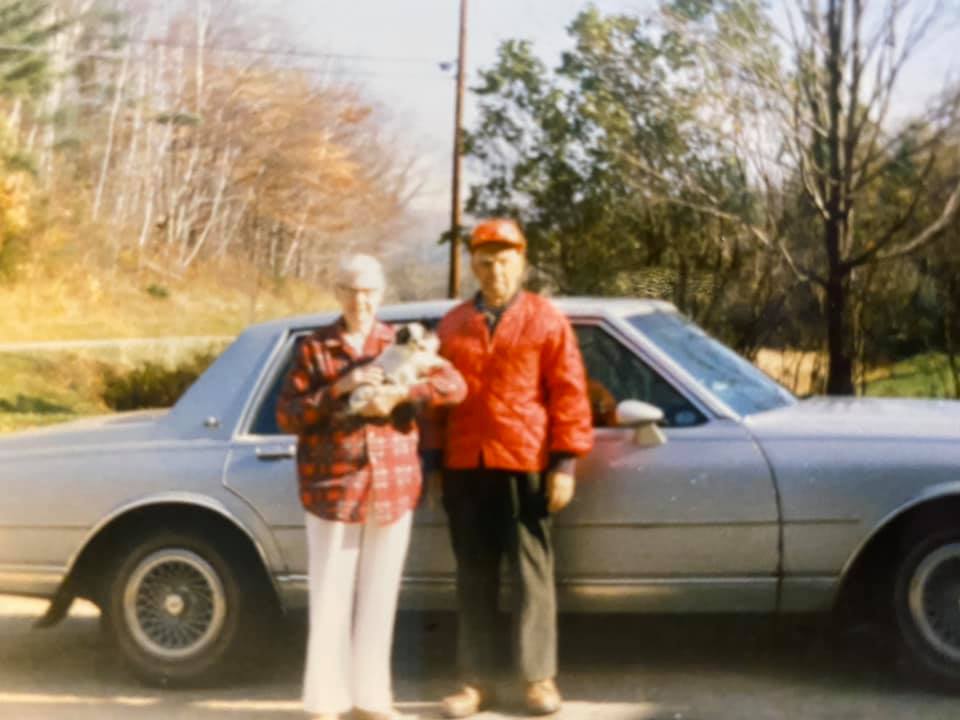
Great-Granny fought battles each week with such courage and strength! I never saw her falter or struggle. Multiple times a week, she took Great-Grandpa to the hospital for dialysis! I hated the smell of the hospital and hated that Great-Grandpa had to endure such a procedure! I’m sure Great Granny is slaying dragons in heaven! Great Granny’s name was Winifred…. what I didn’t know until I was an adult that her name was Winifred Darling. Oh how loved and treasured she must have been for her parents to give her such a name! My great-grandma and great-grandpa.
Winifred and Nelson Lawrence on November 2, 1986 #kindnessmatters
While all contributions to history never cease to amaze! Traveling down memory lane is taken from memories shared by one of our avid history investigators. Martha Briggs writes of her fond memories sparked after reading “The First Mail Route” and growing up in Horton Heights. Martha shared her memories of people waiting at her house for the mail to be delivered, which happened at the corner of her family’s property. Mrs. Musick, a neighbor from down the street, was at the house every day by 9 am to ensure she received prompt delivery of the post. The stone marker commemorating the Pony Express was within 25 feet of family land and shared many fond memories of childhood adventures of climbing the monument.
Martha’s memories of school days are particularly fond. The first school recollected was the 3rd Ward Elementary School. Horton had four school wards in the early years. Martha later studied in the high school basement, which is where grades fourth through sixth attended. Mrs. Daisy McKee was her sixth-grade teacher and also taught Math to fourth, fifth and sixth grades. Mrs. McKee had also taught Martha’s mother school many years before. Students looked forward to a treat each day. The privilege was to walk to Mrs. McKee’s house where Martha’s mother had prepared lunch “but watch your p’s and q’s because if one were just a bit out of line, Mrs. McKee would deny the privilege of the noon walk.”
Martha was a member of the VFW Drum and Bugle Corps and studied under Jules Bourquin. The Bourquin’s, as you might remember, owned a jewelry and optometry shop in Horton. Martha recollects never becoming proficient in the bugle but did work her way up as majorette. Martha considers her performance of “Swan Song,” leading the VFW Drum and Bugle Corps down Saint Joseph’s streets, Missouri, her best performance. Fourth of July in Horton, there were picnics at Mission Lake with extravaganzas across the lake while eating sandwiches. Martha would remember driving her mother to teach home economics (cooking and sewing) at the Kickapoo Indian Reservation. Martha first had to obtain her driver’s license. Beginning a new adventure armed with forty cents and a trip to the justice of the peace in Horton, she became a licensed driver, no written test required. As always, there is so much more to every story. Find it, be sure to reach out, and let me know what you discover! #HistoryMysteries
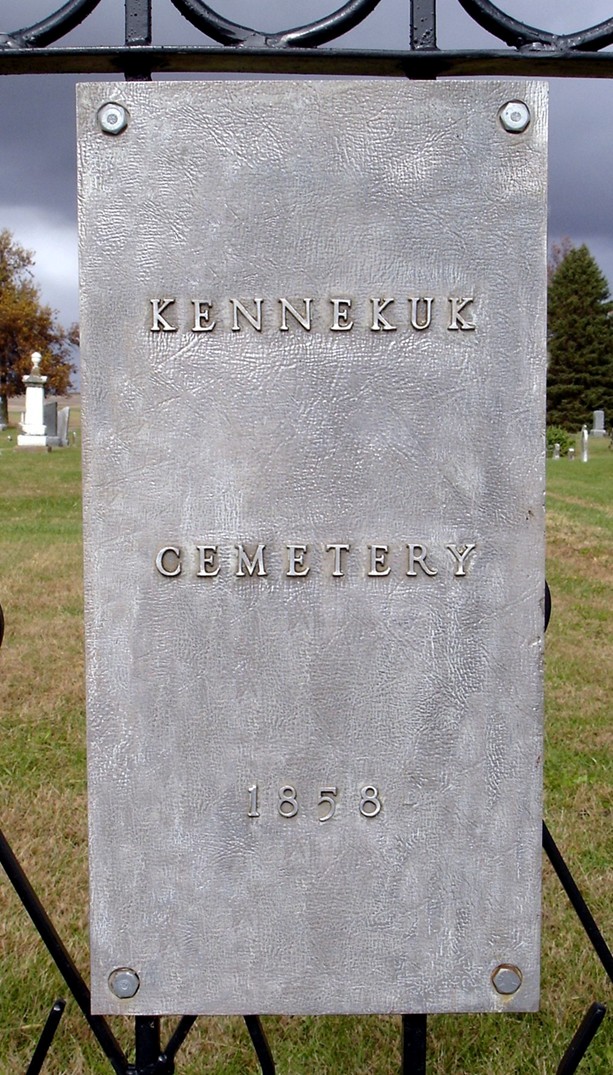
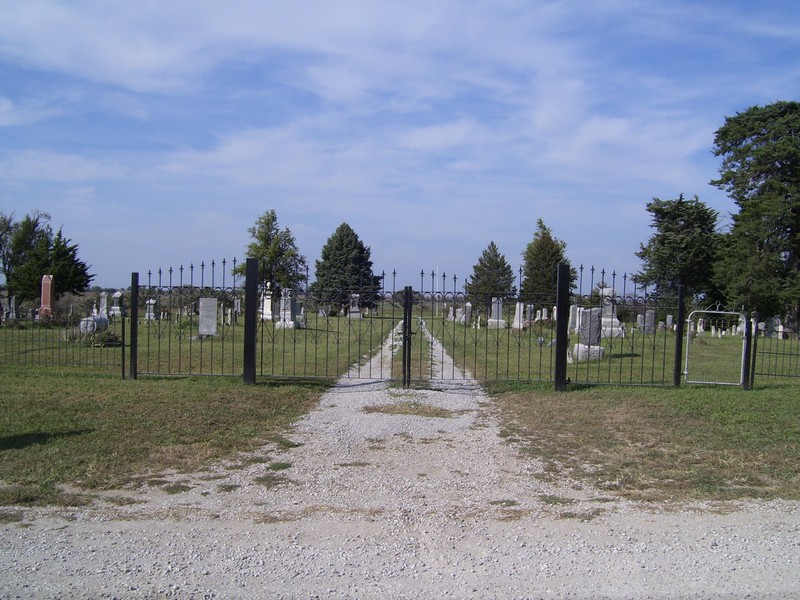
Follow the longitude and latitude to 39.6534° N, 95.4874° W, and you will discover a very well-kept cemetery. In 1858, Kennekuk found a need for a cemetery within the community. Kennekuk, now nearly erased from the map, was approximately 1 ½ mile South of the cemetery.
One of the earliest settlements in Kansas was located in Kennekuk to establish a Methodist Episcopal Church Mission established in 1833. The mission and Kickapoo tribe infused with one another in the same region. Thus, the town’s name honored the Kickapoo Chief and prophet “Kennekuk,” who relocated to the area in 1832.
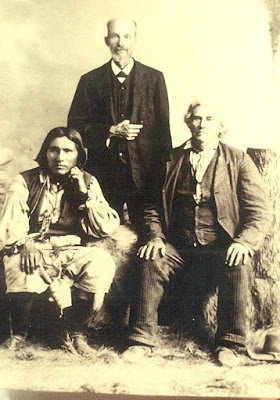
The first relocated individual was a man of French lineage. The man who settled and built and home in Pascal Pensoneau, born in Cahokia, Illinois. The Pensoneau family immigrated from Canada to Illinois. Paschal acquires his land from the government for years of service. The land where the home was described to be located on Stranger Creek banks in 1839. Paschal was an interpreter and fur trader. In 1844, Paschal married the daughter of the Chief, Shikina. Paschal and Shikina will have children. The children have been another history mystery that has not yet unraveled itself. One daughter is Peponie Pensoneau. Paschal and Shikina also adopt a son named Stephen. Paschal was highly regarded and well thought of by people of the community. The people remembered him as intelligent, polite, courteous, and well-mannered. Paschal’s family did not acknowledge either he or his family following the marriage. The descendants of Paschal and Shakina are active in leadership roles and maintain the family’s history and legacy. Shakina and Paschal should be remembered and honored for the accomplishments in life and the lasting ripple they had on future generations. Perhaps you know of someone who has celebrated many accomplishments and achievements. As always, there is so much more to every story. Find it, be sure to reach out, and let me know what you discover! #HistoryMysteries
Pictured Paschal Pensoneau, the image is the intellectual property of the Kansas Historical Society.
Pictured Kennekuk Cemetery photographs are the intellectual property of Lynn Allen.







 Forest of Words